Made to order / Planning guide
Prepare a Custom Shower Enclosure Quote
Build a useful brief for a made-to-order shower enclosure: opening dimensions, layout, glass, hardware, quantity, destination and drawing requirements.
By AimeShower · Updated
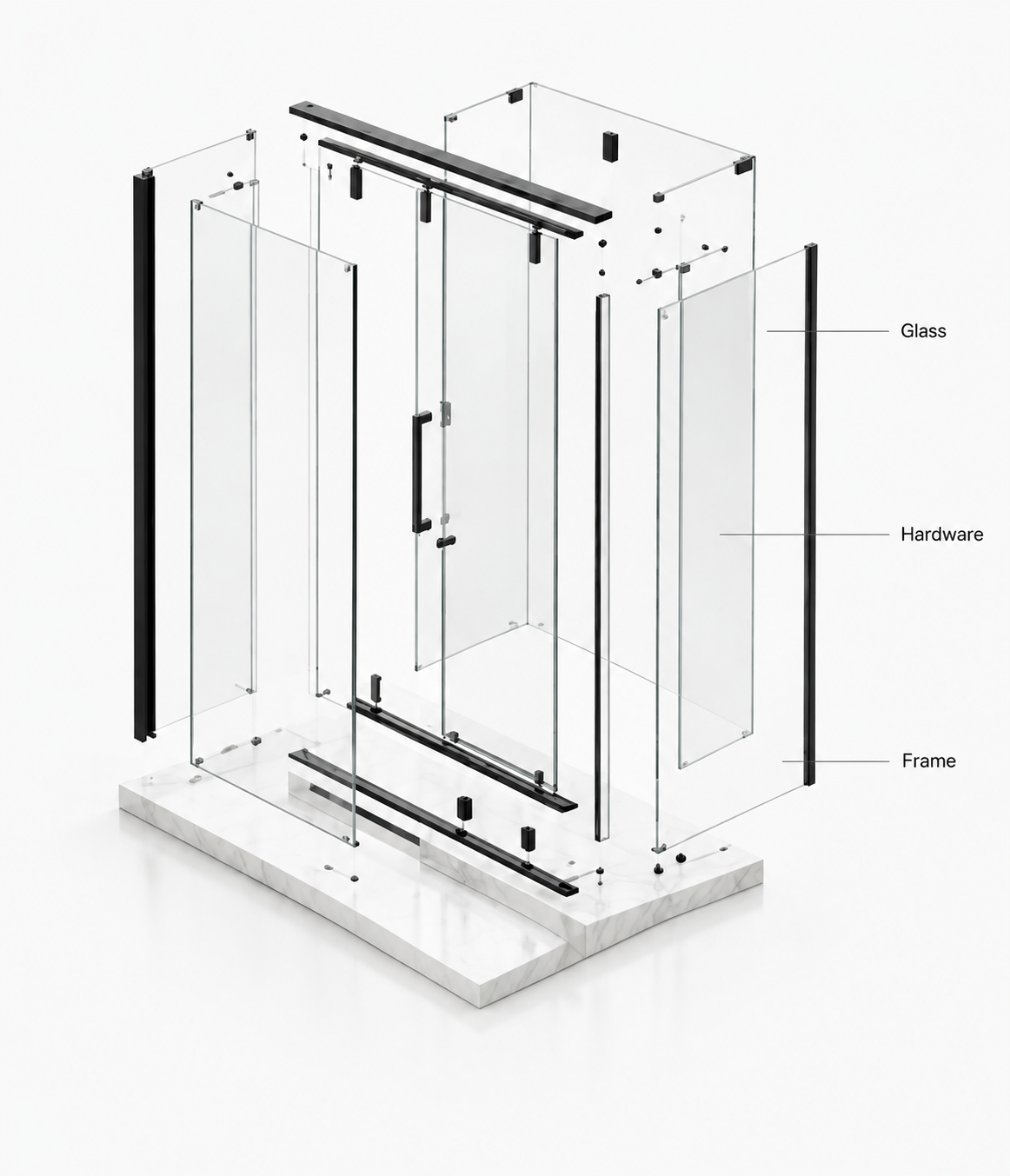
Start with the project, not a stock size.
AimeShower products are made to order. A catalogue picture helps identify a design direction; it does not define a fixed size, price or complete specification. A clear brief lets us review the enclosure and the information still needed before a quotation can be confirmed.
Include these details in your enquiry.
You can start with a sketch and photographs. Mark unknown information rather than guessing, and identify whether measurements are finished or provisional.
Company, contact person, destination country and delivery location.
Door family and preferred movement: sliding, hinged, corner entry or another proposed layout.
Opening width and height with units; for a corner layout, label each side separately.
Wall construction, uneven surfaces, floor or tray details and nearby fittings.
Glass appearance, hardware and finish preferences, plus any required project documents.
Estimated quantities by layout, private-label needs and packing or labelling requirements.
Required drawing formats, desired schedule and the person responsible for final site dimensions.
How does your input affect the quotation?
The review connects each requirement to the proposed manufacturing and packing scope. Record unresolved items explicitly; a provisional dimension or preference is not an order approval.
| Buyer input | Quotation impact | Who confirms |
|---|---|---|
| Opening and site conditions | Finished dimensions, wall support and floor details affect panel sizing, fixing choices and the layout under review. | The buyer’s installer or site team checks the measurements; AimeShower reviews the proposed manufacturing configuration. |
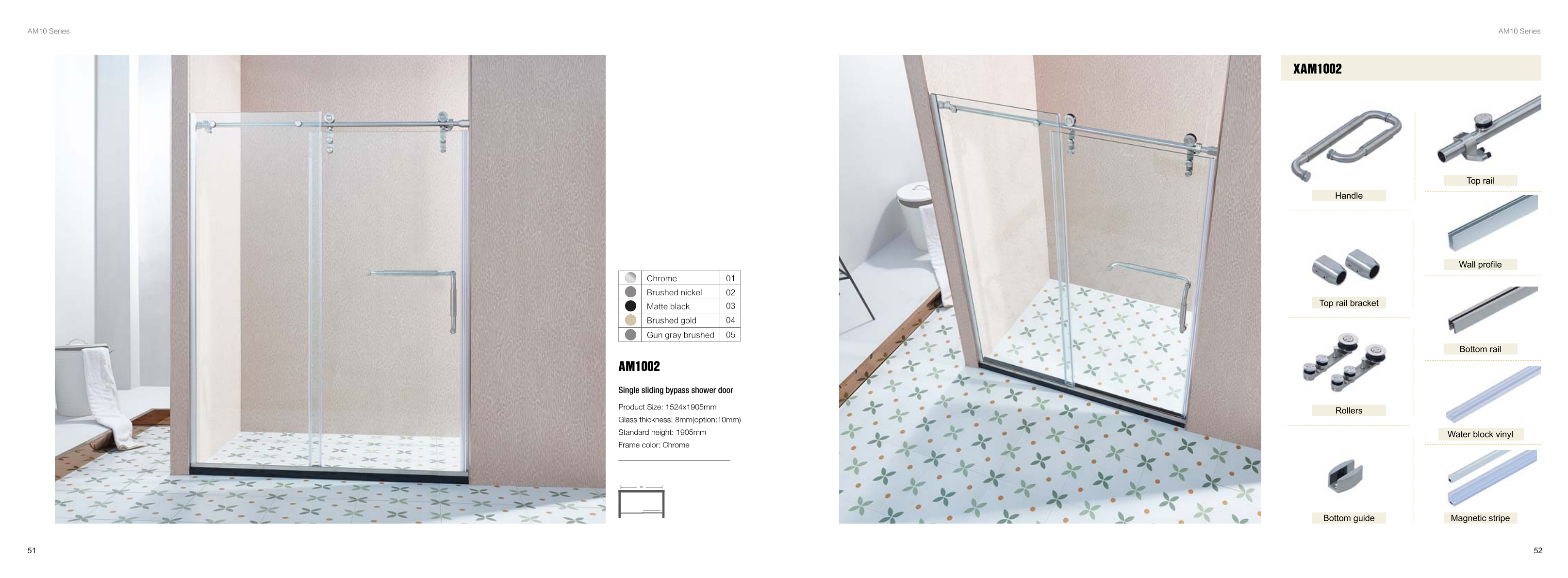
| Door layout, glass and hardware | Movement, component compatibility and finish preferences define the configuration to be quoted. A catalogue image alone leaves these choices open. | The buyer identifies requirements; both parties confirm the selected configuration and any sample references. |
| Quantities allocated to each layout | A range total does not identify the quantity of each custom configuration. Separate allocation makes the order scope clear. | The buyer supplies the allocation; AimeShower confirms quotation scope and any quantity conditions. |
| Destination, labels and packing | Delivery location, label requirements and protection needs affect the packing and freight information required. Bare product size is not packed size. | The buyer supplies destination and handling requirements; packing and any quoted delivery scope are agreed with AimeShower. |
| Documents, samples and requested schedule | Required formats, review steps and sample scope can change the work needed before an order can be confirmed. | The buyer names the reviewer; AimeShower confirms available deliverables, commercial terms and timing for the agreed scope. |
What gets confirmed next?
The layout, glass, hardware and fixing conditions need to work together. The next discussion identifies missing dimensions, component compatibility and the scope of any drawings or samples. Minimum quantities, pricing, sample arrangements and timing depend on the agreed requirements; they are not fixed across all enquiries.
Before production, confirm the applicable drawing revision and order details in writing. A reference picture or initial enquiry is not an approved manufacturing drawing.
A blank enquiry to copy.
Fill in only what you know and mark unresolved items as ‘to confirm’. All fields below are intentionally blank; no dimensions, quantities or terms are suggested.
Company: Contact: Project reference: Destination and delivery location: Layout / catalogue reference: Opening dimensions and units: Finished or provisional measurements: Site measurement owner: Glass, hardware and finish preferences: Quantity by layout: Drawing / sample / packing requirements: Requested schedule: Questions to confirm:
Send your brief.
Use the enquiry form for your company, market, quantity and requirements. Send drawings or attachments to the email shown on the contact page, with the same company and project name so they can be matched to your enquiry. The downloadable brief is a blank checklist, not a specification sheet.
If your enquiry concerns an existing leak.
Keep the reported symptom separate from a request for replacement components. Document the earliest observed crossing, the final pooling point and the door position and timing before asking for a configuration review. Mark observations you do not have as unknown; the enquiry does not establish a faulty part or authorize a repair.
Prepare the leak observation record before requesting a component review